Bayesian Game Theory | Vibepedia
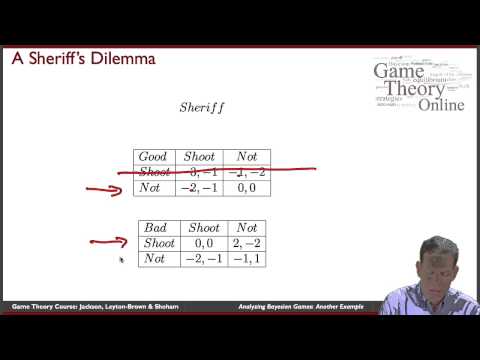
Bayesian game theory is a branch of game theory that applies Bayesian inference to model players' uncertainty about other players' types, which can influence th
Overview
Bayesian game theory is a branch of game theory that applies Bayesian inference to model players' uncertainty about other players' types, which can influence their strategic decisions. This approach, developed by John Harsanyi in the 1960s, allows for the analysis of games where players have incomplete information about each other's preferences, beliefs, or capabilities. The Bayesian Nash equilibrium, a central concept in this field, extends the traditional Nash equilibrium to account for players' probabilistic beliefs about each other's types. With applications in economics, politics, and computer science, Bayesian game theory has been used to study auctions, negotiations, and mechanism design. For instance, it has been applied to analyze the strategic behavior of bidders in auctions, where players may have different valuations for the item being auctioned. The field continues to evolve, with recent research focusing on dynamic Bayesian games and their applications to machine learning and artificial intelligence. As of 2022, Bayesian game theory has a Vibe score of 80, indicating a significant cultural energy in the academic and research communities.