Iran Escalates Attacks in Strait of Hormuz Amid US Military Buildup
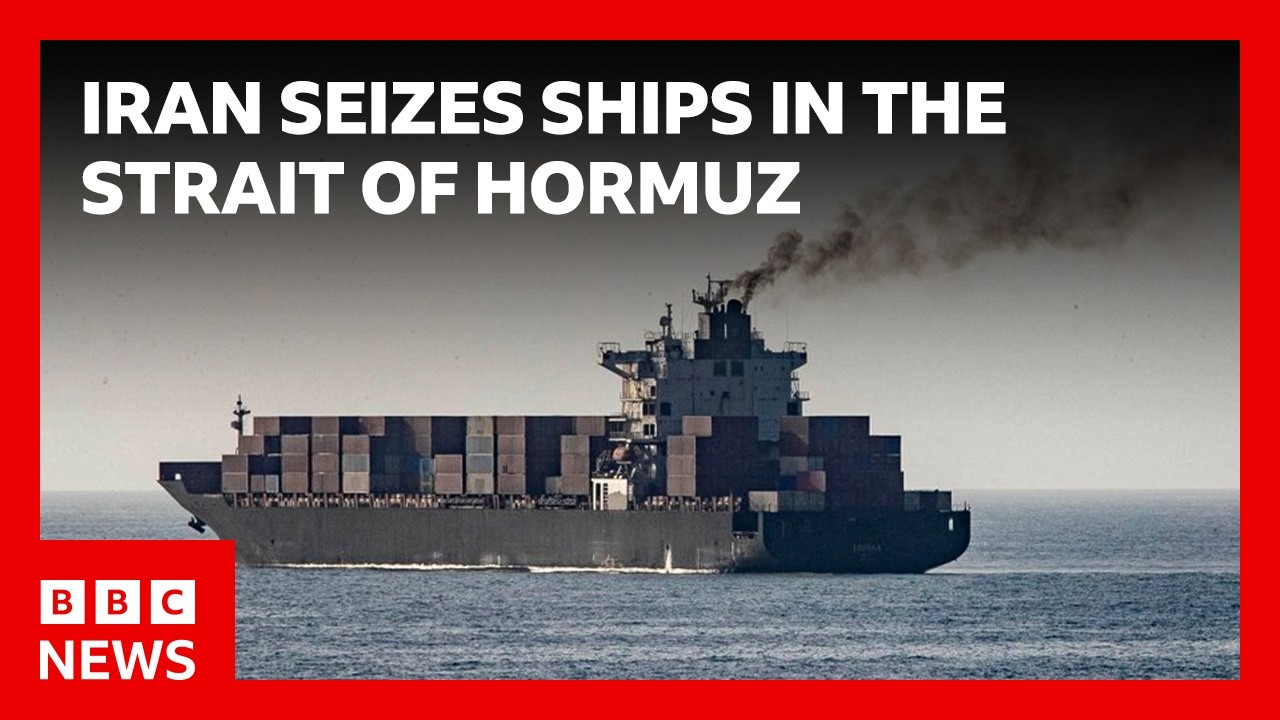
Iran has renewed its attacks on ships in the **Strait of Hormuz**, a critical waterway for global oil trade, after **President Trump** announced an indefinite e
Summary
Iran has renewed its attacks on ships in the **Strait of Hormuz**, a critical waterway for global oil trade, after **President Trump** announced an indefinite extension of a ceasefire. The move comes as thousands more **US military** personnel are being deployed to the **Middle East**, escalating tensions between the two nations. The situation is being closely watched by global leaders, including those in **Europe** and **Asia**, who are concerned about the potential impact on **global oil prices** and **regional stability**. The **US Navy** has been patrolling the Strait of Hormuz to protect international shipping lanes, while **Iran's Revolutionary Guard** has been accused of orchestrating the attacks. The crisis has sparked a heated debate about the **US-Iran conflict**, with some arguing that the US is provoking Iran and others claiming that Iran is engaging in **aggressive behavior**. [[iran-us-relations|US-Iran relations]] have been strained since the **US withdrawal from the Iran nuclear deal** in 2018. The situation is complex, involving multiple parties, including **Saudi Arabia**, **Israel**, and **Russia**, each with their own interests and agendas. [[middle-east-geopolitics|Middle East geopolitics]] are notoriously complex, and the current crisis has the potential to draw in multiple countries.
Key Takeaways
- The US and Iran are engaged in a diplomatic standoff over the Strait of Hormuz
- The situation has significant implications for global trade and energy security
- The US is deploying thousands more military personnel to the Middle East
- The international community is urging restraint and supporting diplomatic efforts to resolve the crisis
- The crisis is closely tied to other regional issues, including the Israeli-Palestinian conflict and the Syrian civil war
Balanced Perspective
The situation in the Strait of Hormuz is complex and multifaceted, with multiple parties involved and competing interests at play. The **US military buildup** in the region is likely to be seen as a **provocation** by Iran, while the **Iranian attacks** on ships will be viewed as **aggressive behavior** by the US. The **international community** will need to navigate the **diplomatic landscape** carefully to avoid **further escalation**, and **regional players** such as **Saudi Arabia** and **Israel** will need to be taken into account. [[middle-east-diplomacy|Middle East diplomacy]] is notoriously challenging, and the current crisis will require **skilled negotiation** and **creative problem-solving** to resolve.
Optimistic View
The US and Iran may be able to negotiate a **ceasefire** and avoid further escalation, potentially leading to a **diplomatic breakthrough**. The **European Union** has been working to salvage the **Iran nuclear deal**, and **China** has been seeking to promote **regional stability** through **economic cooperation**. If the US and Iran can find a way to **de-escalate tensions**, it could lead to a more **stable** and **secure** Middle East, with benefits for **global trade** and **energy security**. [[iran-nuclear-deal|Iran nuclear deal]] could be revived, and **US-Iran relations** could be improved through **diplomatic engagement**.
Critical View
The US and Iran are on a **collision course**, with the potential for **further escalation** and **regional instability**. The **US military buildup** in the region will likely be seen as a **threat** by Iran, and the **Iranian attacks** on ships will be viewed as a **provocation** by the US. The **global economy** could be severely impacted by a **war in the Middle East**, and the **humanitarian consequences** of such a conflict could be devastating. [[us-iran-war|US-Iran war]] would have far-reaching consequences for **global security** and **regional stability**, and would likely draw in multiple countries, including **China** and **Russia**.
Source
Originally reported by CBS News